I am very pleased to report that traditional crafts now have a powerful voice and strong advocate in government.
One of the reasons traditional crafts have struggled for recognition in the UK is that they cross the boundaries of many different government organisations but don't fall completely within the remit of any. We have never been recognised as art because the modern art world is all about innovative practice, superb quality work which is part of a long tradition does not count. Neither are we recognised as heritage since in the UK heritage has been interpreted as buildings and monuments and has tended to be backward looking preserving things from the past where traditional crafts are always developing and alive.We have previously met with Arts Minister, Ed Vaizey, Culture Secretary, Jeremy Hunt, Heritage Minister, John Penrose who have all been supportive but it is fair to say none have been passionate and not much action has resulted.
We were running out of ministers to visit then back in October last year John Hayes minister for Business Innovation and Skills out of the blue gave a speech at the RSA calling for a new arts and crafts movement. The speech was fantastic and the full text is here
or watch the speech here
We immediately asked for a meeting but these things take time and we finally had our meeting yesterday. In private John Hayes is totally passionate about craftsmanship. This is not the core area of his ministry but it is something he cares very genuinely about. He was wearing an English made suit, shirt and Church's shoes and is equally passionate about buying locally produced food. We talked at length about how we could work together to turn the points in his speech into action, first surveying the traditional crafts in the UK so that we know what is out there, which are seriously endangered and which present good opportunities for growth. We presented the cases of a number of firms we knew of where there was a desire to pass skills on or take on apprentices but the problem of current government schemes not recognising or supporting benchside learning from a master craftsperson only college learning is recognised. The minister made it clear that this must was an anomaly that we must work to rectify. The colleges don't have the specialist skills and knowledge of these crafts and we must make it viable for those with the skills to pass them on.
Having been working hard and campaigning on these issues for many years this was the first time we have heard a minister specifically say that they would take action to make a change. Conveniently the the official of the department dealing with these issues is based in Sheffield, is equally passionate and knows of many of the craftspeople we have been highlighting in the Sheffield cutlery industry. Change will not happen overnight but we do currently have a window of opportunity and will be working very hard to work with the minister for more recognition and promotion for traditional craftspeople.
Thursday, 17 March 2011

Tuesday, 15 March 2011
London 3 times in a week, all in the name of traditional craft.
Today was a quick trip to London for a meeting with a range of organisations in the world of heritage and craft. We are trying to work together to see if there are key issues that affect us all. If there are then joint campaigns are more likely to be successful than working alone. We met at HLF offices and since HLF are undertaking their policy review at the moment if we can feed into that we may help them target their funds to where it is most effective 12 months down the line.
Wednesday is a busy day of meetings in London most importantly with John Hayes skills minister to discuss craft skills training issues. Then we meet the Marsh Trust to discuss a potential Marsh Award for heritage crafts, third meeting is at the V&A to run through final plans for the HCA conference on Saturday and then we meet with arts and business who run the excellent Crafted scheme to see if there are ways we can work together.
It is a great relief that HCA now has enough funds to cover my travel expenses for these trips but the time is and always will be voluntary so I need to squeeze some workshop time in too to pay the bills.
Tomorrow I am putting finishing touches to powerpoint presentations for the V&A on Saturday. We have some huge news to open the conference with which we have known for a couple of weeks and can't wait to share, it involves a very high profile new supporter of the Heritage Crafts Association. We also have just received back finished data from a major survey of all the councils of England, 354 of them, finding out what they do to support crafts in their area (or not).
Wednesday is a busy day of meetings in London most importantly with John Hayes skills minister to discuss craft skills training issues. Then we meet the Marsh Trust to discuss a potential Marsh Award for heritage crafts, third meeting is at the V&A to run through final plans for the HCA conference on Saturday and then we meet with arts and business who run the excellent Crafted scheme to see if there are ways we can work together.
It is a great relief that HCA now has enough funds to cover my travel expenses for these trips but the time is and always will be voluntary so I need to squeeze some workshop time in too to pay the bills.
Tomorrow I am putting finishing touches to powerpoint presentations for the V&A on Saturday. We have some huge news to open the conference with which we have known for a couple of weeks and can't wait to share, it involves a very high profile new supporter of the Heritage Crafts Association. We also have just received back finished data from a major survey of all the councils of England, 354 of them, finding out what they do to support crafts in their area (or not).
Sunday, 6 March 2011
vocational vs academic education
The Wolf report on vocational education this week set out the way vocational education will change in the UK over the coming years and highlights significant problems in current provision. http://www.education.gov.uk/publications/standard/publicationDetail/Page1/DFE-00031-2011.
Michael Gove, education secretary, when commissioning the report said
"For many years our education system has failed properly to value practical education, choosing to give far greater emphasis to purely academic achievements. This has left a gap in the country’s skills base"
Professor Wolf said
"Our current arrangements for 14-19 education are highly bureaucratic and inflexible. They also make it very difficult to encourage excellence in anything which is not conventionally academic: writing about people doing things gets rewarded more than actually doing them."
Personally I am unhappy with the whole idea of "vocational" as against "academic" learning. Is the majority of academic learning not also designed to make you employable? and should non academic subjects not be taught as part of a holistic education to the brightest students as well as less academically able? The crafts seem to me to be one place where those academically able folk that also enjoy tangible work find a good balanced life, engineering is another. Should brain work and hand work be viewed as mutually exclusive? and does the current academic vs vocational system tend toward that view?
Current government thinking is that they want to raise the status of vocational eduction. Will they manage that without getting better quality students to consider it as an option? I feel at present vocational is viewed in school and beyond as the career choice for the academically less able. This is wrong. Many academically able people end up coming back to working with their hands out of choice at a later stage because it can be fulfilling, tangible work. The Wolf report is good and highlights some excellent schemes such as Rolls Royce apprenticeships as well as slating the vast number of low level vocational courses which are now proven to offer no improvement in job prospects.
Michael Gove, education secretary, when commissioning the report said
"For many years our education system has failed properly to value practical education, choosing to give far greater emphasis to purely academic achievements. This has left a gap in the country’s skills base"
Professor Wolf said
"Our current arrangements for 14-19 education are highly bureaucratic and inflexible. They also make it very difficult to encourage excellence in anything which is not conventionally academic: writing about people doing things gets rewarded more than actually doing them."
Personally I am unhappy with the whole idea of "vocational" as against "academic" learning. Is the majority of academic learning not also designed to make you employable? and should non academic subjects not be taught as part of a holistic education to the brightest students as well as less academically able? The crafts seem to me to be one place where those academically able folk that also enjoy tangible work find a good balanced life, engineering is another. Should brain work and hand work be viewed as mutually exclusive? and does the current academic vs vocational system tend toward that view?
Current government thinking is that they want to raise the status of vocational eduction. Will they manage that without getting better quality students to consider it as an option? I feel at present vocational is viewed in school and beyond as the career choice for the academically less able. This is wrong. Many academically able people end up coming back to working with their hands out of choice at a later stage because it can be fulfilling, tangible work. The Wolf report is good and highlights some excellent schemes such as Rolls Royce apprenticeships as well as slating the vast number of low level vocational courses which are now proven to offer no improvement in job prospects.
Monday, 28 February 2011
What is Sloyd?
All of a sudden I have heard lots of folk talking about "sloyd". Like "utsushi" in my last post this is a foreign word which has many subtle meanings which are lost in the normal translation simply as "handcraft". This word I know a little more about though having spent some time in Sweden and teaching at the national handcraft school at Saterglantan.
Sloyd or slöjd in the 19th century could perhaps have been translated as handcraft though it seems most commonly applied to the woodwork and the wider range of home crafts including textiles etc tend to be called hemslöjd. Sloyd like craft had dual meanings of sleight of hand or crafty but the real change came in the late 19th century. Uno Cygnaeus introduced crafts or sloyd as a mandatory subject in the Finish school system. Later Otto Salomon developed the ideas further in Sweden and popularised them through his teachings at the international craft teachers school at Naas.
The idea of "educational sloyd" was that it was not vocational, it was taught as part of a holistic education in the same way that we teach physical education today to all students not as if they are going to be great athletes but because it benefits the whole person to take some exercise. So educational sloyd helped students develop in many ways. The learnt hand eye coordination obviously but also accuracy, learning the importance of quality in workmanship and learning to understand and honour handwork and physical labour even if they were bound for desk jobs themselves. There are many parts of Salomon's teachings which I used when developing my own teaching methods for my spoon carving courses. He broke down woodworking into a series of very simple steps that could be mastered in turn. First using a tool in a particular way, then doing a simple project, then progressing to slightly more complex methods and projects.
Today sloyd is most commonly associated with free carving with axe and knife but most of Salomon's teaching was what we would call bench joinery. He was I believe the first to start by teaching the making of joints on practice pieces, progressing from simple to complex joints. This was still being taught in woodwork classes in UK schools in the 1980's and still survives in city and guilds woodwork teaching. Not many folk know that those techniques of teaching came originally from Naas. A great many UK teachers went to Naas in the late 19th and early 20th century so much so that the word sloyd is used commonly in educational writing in English at the time and there is never need to explain it, people knew what it meant. In 1892 S Barter published "Woodwork, the English Sloyd" free download here which was an adaptation of the Naas system created in association with the City and Guilds. Salomon's "teachers handbook of Sloyd" used to sell for silly money but was reprinted a few years ago so I finally got a copy and it is now available free online here.
Sadly over the years the original concept of sloyd teaching as good wholesome practice that benefited the whole person was eroded. By the time I was at school woodwork classes whilst still following much of the basics of Salomon's methods had become primarily vocational. If you were academically intelligent you did academic subjects and if you weren't well then you chose between woodwork and metalwork. Once it was established that this was vocational rather than holistic education it took a short time to look what people were doing in industry and out went dovetails and timber to be replaced by biscuit joints then MDF. Very soon "craft design and technology" became "design and technology" did anyone notice that happen? when was it? it was certainly within the last 10 years and now DT is about designing stuff to be cut out by laser cutters and made by injection moulders. It has become one more subject where kids sit down at computers instead of using their hands on real raw materials to make something.
The only place I have seen making a real difference is Ruskin Mill Educational Trust. They do wonderful things with their students but it is sad it is not mainstream education. So educational sloyd was not about handcraft or making stuff. It was a pedagogical theory (pedagog is a wonderful word which is used a lot by Swedes) it was about going through a process of teaching which had a profound effect on the student. I think many of us who teach craft skills well see regularly what a profound effect it can have when people discover they can use a tool well, and having perhaps struggled and persevered they master some difficult technique. I love sharing in that experience, it only comes when you allow the student to work on their own, don't do it for them, do all you can to make the process smooth, good sharp tools, good raw material, a little gentle advice here and there, check they are safe and making progress, encourage when the going is tough and finally share in the joy and sense of achievement. I do love my job.
I see all this as being parallel to cookery teaching in schools. There was a stage when kids were designing ready meals and deciding what made a healthy pizza without somehow ever making the pizza. Jamie Oliver made a huge difference there and we need to do the same with craft teaching. Get back to simple tools and real raw materials because that is where children learn most and are empowered. There is nothing empowering about using a laser cutter however perfect the result. I suspect the flush of "sloyd" on the web is due to Roy Underhill my friend Sean Hellman just posted a link to this episode of his woodwrights shop program. There can be little doubt the source of the material for the episode was another friend Doug Stowe who has a nice blog called "the wisdom of hands" we correspond on the subject of sloyd and he wrote a few good articles 5 years ago in the US woodwork press. Roy puts it across well though and great to get it out to a wide audience.
Sloyd or slöjd in the 19th century could perhaps have been translated as handcraft though it seems most commonly applied to the woodwork and the wider range of home crafts including textiles etc tend to be called hemslöjd. Sloyd like craft had dual meanings of sleight of hand or crafty but the real change came in the late 19th century. Uno Cygnaeus introduced crafts or sloyd as a mandatory subject in the Finish school system. Later Otto Salomon developed the ideas further in Sweden and popularised them through his teachings at the international craft teachers school at Naas.
The idea of "educational sloyd" was that it was not vocational, it was taught as part of a holistic education in the same way that we teach physical education today to all students not as if they are going to be great athletes but because it benefits the whole person to take some exercise. So educational sloyd helped students develop in many ways. The learnt hand eye coordination obviously but also accuracy, learning the importance of quality in workmanship and learning to understand and honour handwork and physical labour even if they were bound for desk jobs themselves. There are many parts of Salomon's teachings which I used when developing my own teaching methods for my spoon carving courses. He broke down woodworking into a series of very simple steps that could be mastered in turn. First using a tool in a particular way, then doing a simple project, then progressing to slightly more complex methods and projects.
Today sloyd is most commonly associated with free carving with axe and knife but most of Salomon's teaching was what we would call bench joinery. He was I believe the first to start by teaching the making of joints on practice pieces, progressing from simple to complex joints. This was still being taught in woodwork classes in UK schools in the 1980's and still survives in city and guilds woodwork teaching. Not many folk know that those techniques of teaching came originally from Naas. A great many UK teachers went to Naas in the late 19th and early 20th century so much so that the word sloyd is used commonly in educational writing in English at the time and there is never need to explain it, people knew what it meant. In 1892 S Barter published "Woodwork, the English Sloyd" free download here which was an adaptation of the Naas system created in association with the City and Guilds. Salomon's "teachers handbook of Sloyd" used to sell for silly money but was reprinted a few years ago so I finally got a copy and it is now available free online here.
Sadly over the years the original concept of sloyd teaching as good wholesome practice that benefited the whole person was eroded. By the time I was at school woodwork classes whilst still following much of the basics of Salomon's methods had become primarily vocational. If you were academically intelligent you did academic subjects and if you weren't well then you chose between woodwork and metalwork. Once it was established that this was vocational rather than holistic education it took a short time to look what people were doing in industry and out went dovetails and timber to be replaced by biscuit joints then MDF. Very soon "craft design and technology" became "design and technology" did anyone notice that happen? when was it? it was certainly within the last 10 years and now DT is about designing stuff to be cut out by laser cutters and made by injection moulders. It has become one more subject where kids sit down at computers instead of using their hands on real raw materials to make something.
The only place I have seen making a real difference is Ruskin Mill Educational Trust. They do wonderful things with their students but it is sad it is not mainstream education. So educational sloyd was not about handcraft or making stuff. It was a pedagogical theory (pedagog is a wonderful word which is used a lot by Swedes) it was about going through a process of teaching which had a profound effect on the student. I think many of us who teach craft skills well see regularly what a profound effect it can have when people discover they can use a tool well, and having perhaps struggled and persevered they master some difficult technique. I love sharing in that experience, it only comes when you allow the student to work on their own, don't do it for them, do all you can to make the process smooth, good sharp tools, good raw material, a little gentle advice here and there, check they are safe and making progress, encourage when the going is tough and finally share in the joy and sense of achievement. I do love my job.
I see all this as being parallel to cookery teaching in schools. There was a stage when kids were designing ready meals and deciding what made a healthy pizza without somehow ever making the pizza. Jamie Oliver made a huge difference there and we need to do the same with craft teaching. Get back to simple tools and real raw materials because that is where children learn most and are empowered. There is nothing empowering about using a laser cutter however perfect the result. I suspect the flush of "sloyd" on the web is due to Roy Underhill my friend Sean Hellman just posted a link to this episode of his woodwrights shop program. There can be little doubt the source of the material for the episode was another friend Doug Stowe who has a nice blog called "the wisdom of hands" we correspond on the subject of sloyd and he wrote a few good articles 5 years ago in the US woodwork press. Roy puts it across well though and great to get it out to a wide audience.
Watch the full episode. See more The Woodwrights Shop.
Sunday, 13 February 2011
The last glass eye maker
From The Times online
"IN A SMALL room overlooking a quiet North London street, Jost Haas sits in a white coat at a cluttered table, delicately blowing into a glass tube until a ball bubbles out from the end. Using skills unchanged for 170 years, he is making an artificial eye such as those that stare unseeing from a wooden tray at his elbow.
It is 35 years since Haas left Germany and brought his wife, Ulla, to this house in Mill Hill, where they raised a daughter. At that time Britain needed two or three glass-eye makers, who, because of the traditional skills used there, usually came from Germany. Now 66-year-old Haas is the only one. When he decides to retire, continuation of the craft here will almost certainly depend on whether a successor can be found from his native country."
The Glass Eye Maker from Tomas Leach on Vimeo.
http://www.timesonline.co.uk/tol/life_and_style/health/article864693.ece
"IN A SMALL room overlooking a quiet North London street, Jost Haas sits in a white coat at a cluttered table, delicately blowing into a glass tube until a ball bubbles out from the end. Using skills unchanged for 170 years, he is making an artificial eye such as those that stare unseeing from a wooden tray at his elbow.
It is 35 years since Haas left Germany and brought his wife, Ulla, to this house in Mill Hill, where they raised a daughter. At that time Britain needed two or three glass-eye makers, who, because of the traditional skills used there, usually came from Germany. Now 66-year-old Haas is the only one. When he decides to retire, continuation of the craft here will almost certainly depend on whether a successor can be found from his native country."
The Glass Eye Maker from Tomas Leach on Vimeo.
http://www.timesonline.co.uk/tol/life_and_style/health/article864693.ece
Friday, 11 February 2011
1000 years of traditional crafts at Lincoln
A Thousand Years of Traditional Crafts at Lincoln Castle and Cathedral
Saturday, 21 May, 2011
This is a nice opportunity to show off your traditional craft at Lincoln. No demonstration fees are available and stands are limited and filling quickly so book soon if you want to go. The event ties in with the major international conference of the Preservation Trades Network. HCA will have a stand in the Nave of the Cathedral. This is the info sent from Lincoln Cathedral....
Together, the Castle and Cathedral have been working on a new event that we intend should be both big and exciting and that aims to raise the profile of heritage skills in Lincolnshire and beyond.
Lincolnshire County Council (LCC) and the Cathedral have increasingly been working together on the heritage skills agenda; so far we’ve obtained Lottery funding to run a bursary scheme over the next five years in joinery, masonry and lead work, and European funding to build a Heritage Skills Centre at Lincoln Castle due to be completed mid 2012.
The work done to date shows that the public are enormously interested and supportive of our plans and this has encouraged us to put on an event that gives people the opportunity to see heritage skills in action. Demonstrations will be absolutely key to the event, whether it be mud and stud, stonemasonry, thatching, blacksmithing or the myriad other skills to be found in the East Midlands. This event is all about ‘showing off’ and making people realise how important these skills are. As someone who is involved in heritage skills we hope you will be interested in demonstrating at this event.
Key points of the day are as follows:
Joint ticket to cover both Castle and Cathedral – first time ever!
Cathedral Workshop will be open to view
Demonstrators in the Cathedral nave (clean only), Castle grounds in marquees and in the Castle Prison where there are 40 cell units which are clean, dry and have lighting (power sockets more problematic)
Have-a-Go activities for Children
Tastes of Lincolnshire food stalls will be placed through the Castle grounds and Castle Square – adding to the attraction of the event
We are used to running large events like this, for example our Sausage Festival at the Castle attracts some 9,500 visitors, and we have planned an extensive promotional campaign to ensure the success of the day for both us and the skills people.
If you would like to attend or just like to know more about the event, contact Penney Francis Penney.Francis@lincolnshire.gov.uk
Saturday, 21 May, 2011
This is a nice opportunity to show off your traditional craft at Lincoln. No demonstration fees are available and stands are limited and filling quickly so book soon if you want to go. The event ties in with the major international conference of the Preservation Trades Network. HCA will have a stand in the Nave of the Cathedral. This is the info sent from Lincoln Cathedral....
Together, the Castle and Cathedral have been working on a new event that we intend should be both big and exciting and that aims to raise the profile of heritage skills in Lincolnshire and beyond.
Lincolnshire County Council (LCC) and the Cathedral have increasingly been working together on the heritage skills agenda; so far we’ve obtained Lottery funding to run a bursary scheme over the next five years in joinery, masonry and lead work, and European funding to build a Heritage Skills Centre at Lincoln Castle due to be completed mid 2012.
The work done to date shows that the public are enormously interested and supportive of our plans and this has encouraged us to put on an event that gives people the opportunity to see heritage skills in action. Demonstrations will be absolutely key to the event, whether it be mud and stud, stonemasonry, thatching, blacksmithing or the myriad other skills to be found in the East Midlands. This event is all about ‘showing off’ and making people realise how important these skills are. As someone who is involved in heritage skills we hope you will be interested in demonstrating at this event.
Key points of the day are as follows:
Joint ticket to cover both Castle and Cathedral – first time ever!
Cathedral Workshop will be open to view
Demonstrators in the Cathedral nave (clean only), Castle grounds in marquees and in the Castle Prison where there are 40 cell units which are clean, dry and have lighting (power sockets more problematic)
Have-a-Go activities for Children
Tastes of Lincolnshire food stalls will be placed through the Castle grounds and Castle Square – adding to the attraction of the event
We are used to running large events like this, for example our Sausage Festival at the Castle attracts some 9,500 visitors, and we have planned an extensive promotional campaign to ensure the success of the day for both us and the skills people.
If you would like to attend or just like to know more about the event, contact Penney Francis Penney.Francis@lincolnshire.gov.uk
Monday, 7 February 2011
please sign petition to save traditional boatbuilding site.
I have written about Standard Quay at Faversham before here
and there was a good article in the Guardian here

Now is your chance in just a few seconds to help save this historic dockyard for the purpose it was intended. Simply follow this link and sign the epetition to show the local council that folk across the country and around the world value this part of our heritage.
Click here to go to the petition
All you need do is enter name, address and email. What is important is that after signing the petition you will be sent an email to confirm your email address and you need to open it and click the confirm signature link in order for you to be registered. As of today they have 128 signatures but I think that a lot of folk care enough about it to give it a few seconds of their time.
and there was a good article in the Guardian here
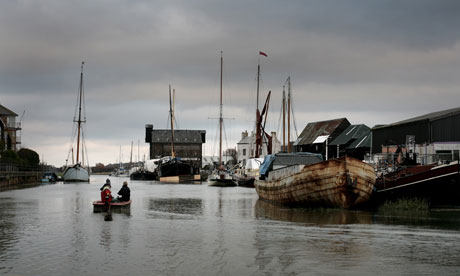
Now is your chance in just a few seconds to help save this historic dockyard for the purpose it was intended. Simply follow this link and sign the epetition to show the local council that folk across the country and around the world value this part of our heritage.
Click here to go to the petition
All you need do is enter name, address and email. What is important is that after signing the petition you will be sent an email to confirm your email address and you need to open it and click the confirm signature link in order for you to be registered. As of today they have 128 signatures but I think that a lot of folk care enough about it to give it a few seconds of their time.
Subscribe to:
Posts (Atom)


 Posts
Posts

